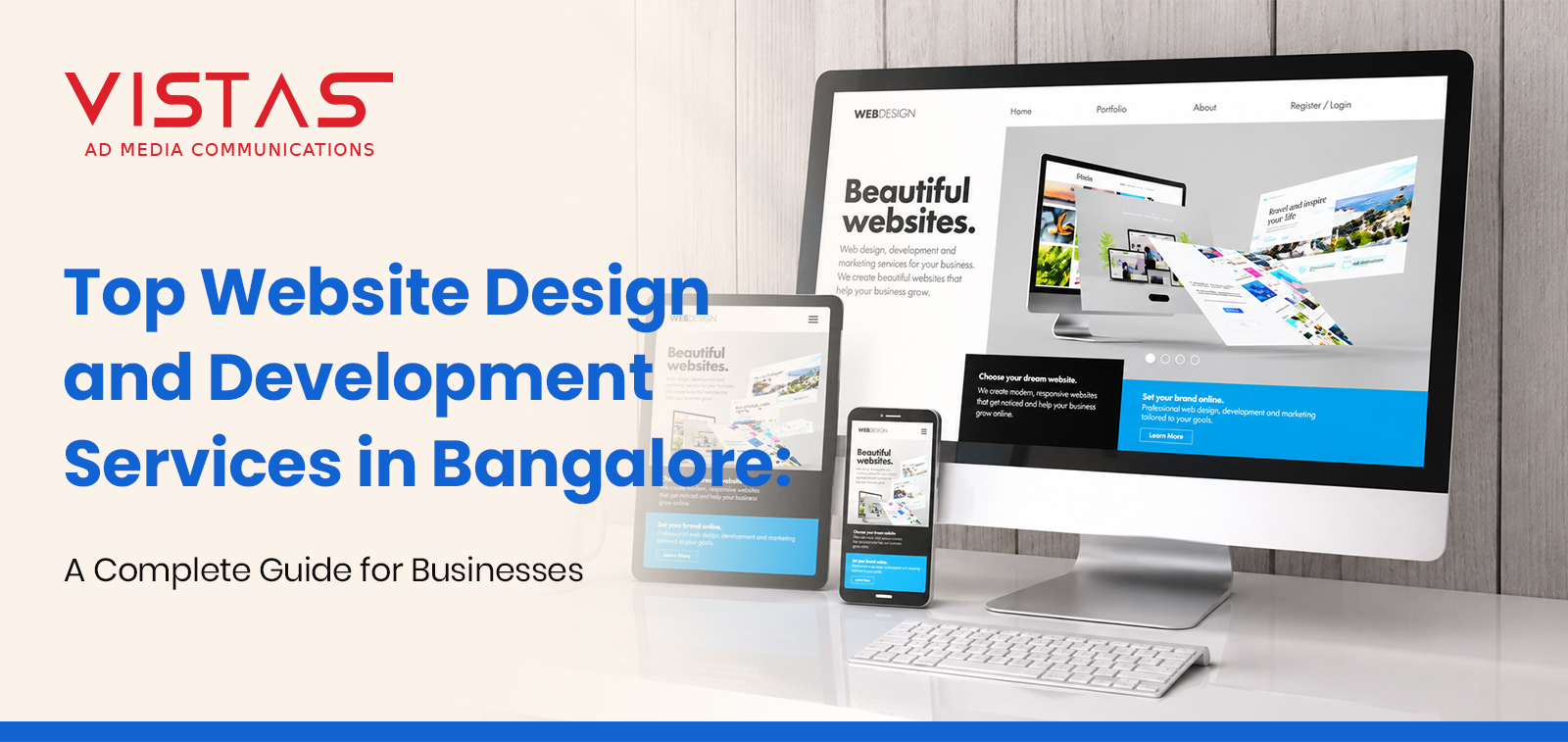
Discover the essential website design and development services businesses need, what to expect from a professional web agency, and how to choose the right partner in Bangalore.
A professional website is one of the most important digital assets a business can invest in. It represents your brand, communicates your products and services, builds credibility, and creates opportunities to attract customers.
For businesses in Bangalore, a city with a competitive technology, startup, manufacturing, real estate, healthcare, and professional services ecosystem, having a website is no longer sufficient. The website must be thoughtfully designed, technically reliable, mobile-friendly, search-engine accessible, and capable of supporting business growth.
Choosing the right website design and development services can make a significant difference to how effectively your business communicates online.
However, the range of services available can be confusing. Should you invest in custom website design, WordPress development, eCommerce solutions, web applications, search engine optimisation, or website maintenance? What should a professional web development company deliver? And how can you compare agencies offering apparently similar services?
This guide explains the top website design and development services in Bangalore, their business applications, and the factors to consider when selecting a professional agency.
Explore How to Choose a Web Design Company in Bangalore.
Table of Contents
What Are Website Design and Development Services?
Website design and development services cover the planning, creation, implementation, optimisation, and maintenance of websites.
- Website design
- Focuses on visual communication, page layouts, user experience, branding, navigation, and how visitors interact with the website.
- Website development
- Involves building the functional website using suitable programming languages, content management systems, databases, integrations, and hosting technologies.
Professional website projects may also involve content writing, search engine optimisation, performance improvements, analytics, security, and ongoing support.
The top website design and development services businesses should consider include custom website design, responsive web design, corporate website development, CMS development, eCommerce development, web application development, UI/UX design, SEO-friendly development, website redesign, and ongoing website maintenance.
The right combination depends on the company's industry, target customers, business objectives, budget, and future growth plans.
Read Web Design vs Web Development: What's the Difference? for more information.
1. Custom Website Design Services
Custom website design creates a digital presence that reflects the identity, positioning, and communication requirements of a particular business.
Unlike generic website templates, a custom design is developed around the company's offerings, customers, brand guidelines, and desired user experience.
What custom website design includes
- Business and audience research.
- Website information architecture.
- Page layouts and visual concepts.
- Brand-specific colours and typography.
- Navigation and user experience planning.
- Responsive page designs.
- Calls to action and conversion journeys.
- Design systems and reusable interface components.
Which businesses benefit?
Custom website design is especially useful for companies that need to communicate a distinctive identity, present complex services, or compete in markets where credibility and differentiation are important.
Examples include technology companies, industrial manufacturers, real estate developers, healthcare organisations, educational institutions, and professional services firms.
Why it matters
A professionally designed website should communicate the company's strengths clearly rather than simply follow the latest visual trend.
Find answers to the important question – which website design trends businesses should adopt in 2026.
For businesses seeking a web design company in Bangalore, the agency's ability to understand the business and translate its strengths into effective communication is as important as its visual design capabilities.
2. Responsive and Mobile-Friendly Website Design
Responsive website design ensures that a website adapts to mobile phones, tablets, laptops, and desktop computers.
Mobile usability is particularly important because potential customers may discover a business, compare services, and submit enquiries using smartphones.
Google also primarily uses the mobile version of website content for indexing.
Essential features
- Flexible page layouts.
- Readable text on different screen sizes.
- Touch-friendly navigation.
- Optimised images and media.
- Accessible buttons and forms.
- Consistent information across devices.
- Mobile-friendly enquiry and contact options.
Business benefits
Responsive design makes it easier for customers to navigate a website and interact with the business regardless of the device they use.
A mobile-friendly website should not simply be a reduced version of a desktop design. Important information, navigation, and conversion opportunities should remain accessible on smaller screens.
Will the website be tested on real mobile devices, different browsers, and multiple screen sizes before launch?
3. Corporate Website Design and Development
Corporate websites serve as an important communication platform for established companies, growing enterprises, and organisations operating across multiple markets.
A corporate website may need to address several audiences, including customers, investors, employees, distributors, suppliers, and business partners.
Typical corporate website requirements
- Company profile and business overview.
- Products and services.
- Industry-specific solutions.
- Leadership and management information.
- Locations and contact details.
- Case studies and project portfolios.
- News, resources, and announcements.
- Careers and recruitment.
- Downloadable brochures and documents.
- Enquiry and contact forms.
Why professional development matters
Corporate websites often require more complex content structures, multiple departments, approval workflows, and integrations.
A professional development approach helps ensure that the website remains manageable as the organisation expands.
For businesses operating in Bangalore and international markets, multilingual content or location-specific sections may also be relevant.
4. WordPress and Content Management System Development
A content management system (CMS) enables authorised users to create, edit, and publish website content without modifying the underlying code for every update.
WordPress is a widely used CMS, but other platforms may be appropriate depending on the project's requirements.
Common CMS capabilities
- Editing page content.
- Publishing blogs and articles.
- Managing images and media.
- Updating services and product information.
- Creating landing pages.
- Managing user roles and permissions.
- Supporting SEO metadata.
- Extending functionality through appropriate integrations.
What businesses should evaluate
A CMS should be selected based on usability, security, performance, scalability, content requirements, and maintenance needs.
WordPress may be suitable for many corporate and service websites, while other platforms or custom solutions may be better for more specialised applications.
Choosing a CMS does not automatically make a website fast, secure, or SEO-friendly. These outcomes depend on the quality of design, development, configuration, hosting, and ongoing maintenance.
5. eCommerce Website Design and Development
eCommerce website development enables businesses to sell products or services online.
A successful eCommerce website requires more than an attractive product catalogue. It must help customers discover products, understand their features, complete purchases, and receive relevant order information.
Key eCommerce features
- Product catalogues and category structures.
- Product search and filtering.
- Detailed product pages.
- Shopping cart and checkout.
- Payment gateway integration.
- Order management.
- Inventory integration where required.
- Shipping and delivery options.
- Customer account functionality.
- Product-related SEO.
- Security and performance optimisation.
Which businesses need eCommerce development?
Retailers, manufacturers, wholesalers, direct-to-consumer brands, distributors, and businesses selling digital products may benefit from eCommerce solutions.
The platform and architecture should be selected according to catalogue size, expected order volumes, payment requirements, integrations, and future expansion.
For businesses planning an online store, explore Vistas' eCommerce website design and development services.
6. Web Application Development
A web application is an interactive software system accessed through a web browser.
Unlike a conventional informational website, a web application typically allows users to perform tasks, manage data, interact with business processes, or access personalised functionality.
Examples of web applications
- Customer portals.
- Online booking systems.
- Business dashboards.
- Workflow management systems.
- Inventory applications.
- Service request platforms.
- Online learning portals.
- Membership systems.
- Custom business applications.
Important development considerations
Web application projects require careful attention to functional requirements, architecture, security, user authentication, data handling, integrations, and testing.
The development team should establish the business requirements and technical scope before recommending a technology stack.
Business benefits
A properly planned web application can streamline customer interactions, support internal processes, and provide digital services beyond the capabilities of a conventional website.
Businesses should distinguish between a standard corporate website and a custom web application when requesting quotations, because their development scope can differ substantially.
7. UI/UX Design Services
User interface (UI) design focuses on the visual and interactive elements of a website.
User experience (UX) design considers how easily visitors can understand, navigate, and complete tasks on the website.
Both disciplines contribute to an effective digital experience.
UI/UX services may include
- User research.
- Customer journey mapping.
- Information architecture.
- Wireframes and prototypes.
- Interface design.
- Navigation planning.
- Usability testing.
- Accessibility reviews.
- Form and conversion-flow optimisation.
Why UI/UX matters
A visually attractive website may still perform poorly if visitors struggle to find information or complete important actions.
For example, a B2B services website should make it straightforward for visitors to understand the services offered, evaluate the company's expertise, and submit an enquiry.
An eCommerce website needs intuitive product navigation and a checkout process that minimises unnecessary friction.
Good UI/UX design connects business objectives with customer needs.
8. SEO-Friendly Website Design and Development
Search engine optimisation should be considered during website planning, not added only after the website is launched.
To get started, explore our guide on How to Build an SEO-Friendly Business Website.
SEO-friendly website development helps search engines discover, crawl, and interpret website content while supporting a useful experience for visitors.
Essential SEO considerations
- Keyword-informed website architecture.
- Dedicated pages for important services.
- Descriptive page titles and headings.
- Search-engine-accessible content.
- Logical internal linking.
- Mobile-responsive design.
- Optimised page performance.
- Appropriate canonical URLs.
- XML sitemap and robots.txt configuration.
- Relevant structured data.
- Correct redirects when URLs change.
- Google Search Console integration.
SEO and AI-assisted search
Businesses should also ensure that their websites provide clear explanations of products, services, company expertise, and relevant customer questions.
Well-structured, factual content can make information easier for search and retrieval systems to understand.
However, no website design technique or schema implementation guarantees inclusion in AI-generated answers or a particular search ranking.
Business benefits
Building SEO requirements into the website from the beginning can reduce the need for avoidable structural changes later.
A professional SEO company in Bangalore can support ongoing content, technical optimisation, search performance monitoring, and other SEO activities after launch.
9. Website Redesign and Redevelopment Services
Business websites need to evolve as technology, customer expectations, and company offerings change.
An older website may no longer reflect the organisation's identity or support its marketing requirements.
Signs a website may need redesigning
- Outdated visual presentation.
- Poor mobile usability.
- Slow-loading pages.
- Confusing navigation.
- Weak enquiry generation.
- Outdated content.
- Difficulty updating information.
- Technical or security problems.
- Limited functionality.
- Inconsistent branding.
Website redesign versus redevelopment
- Website redesign
- Primarily improves visual presentation, user experience, content organisation, and customer journeys.
- Website redevelopment
- Involves more substantial changes to the underlying technology, functionality, architecture, or integrations.
Some projects require both.
Protecting SEO during redesign
Before changing an existing website, review its current URLs, indexed pages, search traffic, internal links, and important content.
When URLs change, implement appropriate redirects and update internal links, canonical tags, and sitemaps.
A redesign should preserve valuable existing assets wherever practical while improving the website's effectiveness.
In this guide, we explore 10 signs your business website needs a redesign, explain why they matter and outline what you can do to improve your website's performance, usability and ability to generate business opportunities.
10. Website Maintenance and Technical Support
Launching a website is only the beginning of its operational life.
Regular maintenance helps keep the website secure, functional, accurate, and compatible with changing technologies.
Website maintenance services may include
- CMS and plugin updates.
- Software dependency updates.
- Security monitoring.
- Website backups.
- Broken-link checks.
- Performance monitoring.
- Form testing.
- Content updates.
- Hosting coordination.
- Technical troubleshooting.
- Recovery support.
Why maintenance matters
A website that is not maintained can develop broken functionality, outdated content, performance issues, and security vulnerabilities.
Businesses should clarify who will be responsible for maintenance, what is included in the support agreement, and how urgent issues will be handled.
Explore website maintenance services for ongoing support considerations.
11. Website Content Writing and Brand Communication
Website content is an essential part of effective design.
A visually attractive layout cannot compensate for unclear messaging, generic service descriptions, or missing information.
Professional website content should explain what the business offers, who it serves, what differentiates it, and how customers can engage with it.
Important content services
- Brand messaging and positioning.
- Homepage content.
- Service-page copywriting.
- Product descriptions.
- Company profile content.
- Case studies.
- Frequently asked questions.
- Blog and resource content.
- Calls to action.
- Search-focused content planning.
Why content should be planned early
Content determines how much information each page needs to communicate.
Designing a website around placeholder text and writing the actual content afterwards can create unnecessary compromises.
For example, an industrial company's product page may need technical specifications, application details, downloadable documents, and enquiry options.
A professional services company may need process explanations, client examples, credentials, and consultation requests.
The page structure should support these different communication needs.
12. Landing Page Design and Conversion Optimisation
Landing pages are designed around a specific campaign, service, product, or customer action.
They are often used for Google Ads, digital marketing campaigns, product launches, and lead generation.
Effective landing page elements
- A headline aligned with visitor intent.
- A clear explanation of the offer.
- Relevant benefits and supporting details.
- Credible evidence and trust signals.
- A focused call to action.
- A straightforward enquiry form.
- Responsive design.
- Fast-loading content.
- Appropriate conversion tracking.
Business benefits
A focused landing page can provide a more relevant experience than sending every advertising visitor to a general homepage.
However, landing page performance depends on the quality of traffic, the offer, the content, and the user experience.
Businesses should monitor qualified enquiries and other meaningful outcomes rather than judging success solely by the number of clicks.
Which Website Design and Development Services Does Your Business Need?
The right combination of services depends on your organisation's objectives.
| Business requirement | Services to prioritise |
|---|---|
| New small business website | Responsive design, CMS, essential service pages, technical SEO |
| Established corporate website | Custom design, corporate development, content architecture, CMS |
| Online retail business | eCommerce development, product UX, payment integration, performance |
| B2B lead generation | Service-page design, SEO, case studies, conversion optimisation |
| Outdated existing website | Website audit, redesign, redevelopment where needed |
| Complex digital platform | Web application development, UI/UX, integrations, security |
| Ongoing marketing | Landing pages, content updates, SEO, analytics |
| Existing website support | Maintenance, backups, security, technical updates |
A professional agency should begin by understanding the business before recommending services or technology.
How to Choose the Right Website Design and Development Company in Bangalore
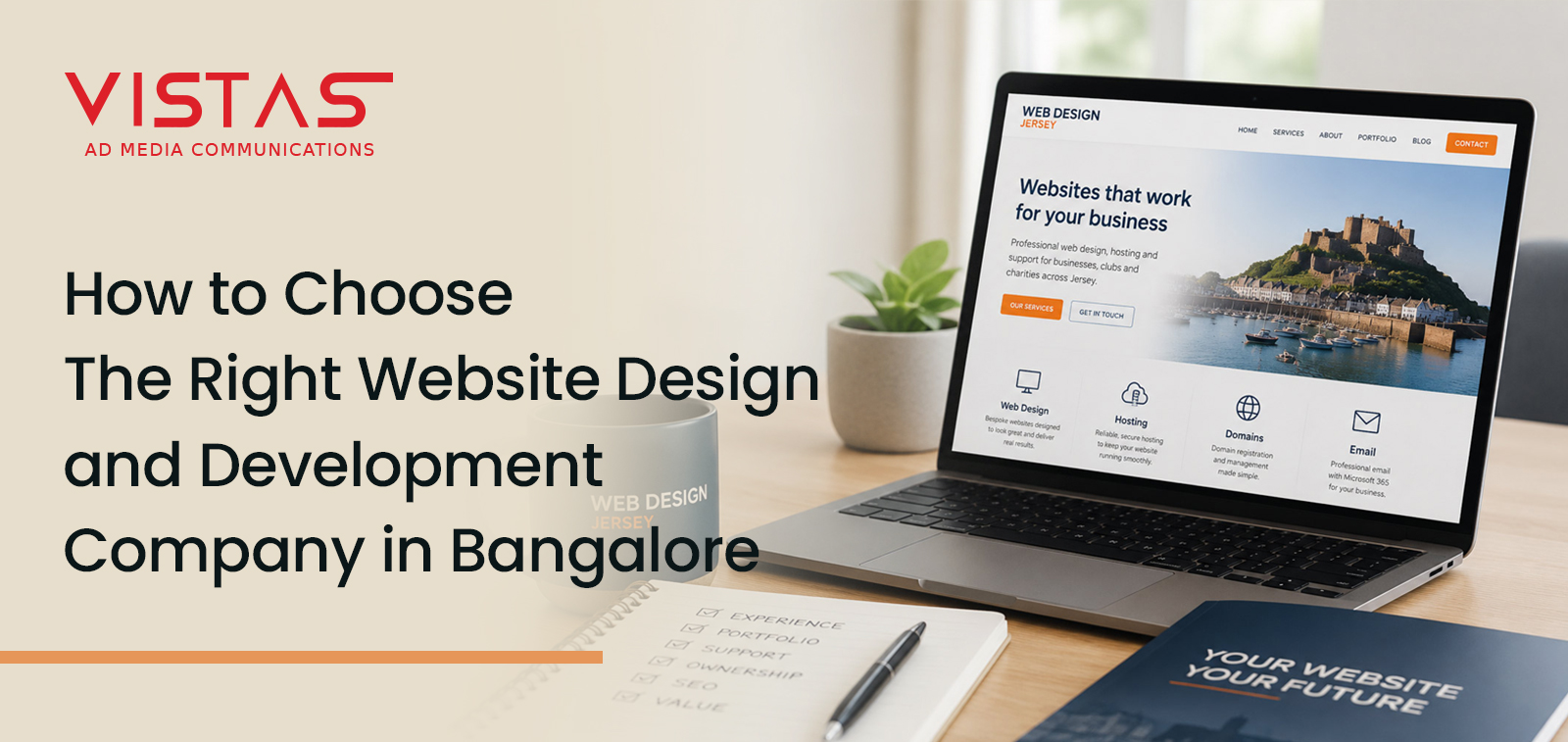
Bangalore offers a wide range of website design agencies, development companies, independent designers, and specialised technology providers.
Choosing the right partner requires evaluating more than the quoted project cost.
1. Examine the agency's portfolio
Review completed websites relevant to your industry, project complexity, or business objectives.
Consider design quality, navigation, mobile usability, content clarity, and the suitability of the solution.
2. Evaluate design and development capabilities
Some providers specialise primarily in visual design, while others focus on programming or technical development.
Determine whether the agency can deliver the full project or whether important activities will require separate vendors.
3. Assess business understanding
A capable agency should ask questions about your customers, products, services, competitors, business goals, and differentiators.
These discussions help shape the website's content and communication strategy.
4. Discuss SEO before development begins
Ask how the agency plans URLs, page hierarchy, metadata, mobile performance, internal linking, redirects, and indexability.
SEO requirements should be incorporated into the project scope.
5. Clarify content responsibilities
Establish who will write, edit, approve, and upload website content.
Content delays can affect design decisions and project timelines.
6. Understand the technology recommendation
Ask why a particular CMS, framework, or development approach is suitable for your requirements.
The best technology choice depends on functionality, maintenance, security, integrations, and scalability.
7. Review the proposal carefully
A professional proposal should clearly describe the scope, deliverables, assumptions, timelines, responsibilities, testing, revisions, and exclusions.
8. Ask about post-launch support
Clarify hosting, domain ownership, backups, security updates, maintenance, and support arrangements.
9. Evaluate communication and project management
Website development requires collaboration between the client, designers, developers, content specialists, and other stakeholders.
Clear communication and defined approval stages help projects progress effectively.
10. Compare long-term value
The lowest quotation may not include all the services required.
Compare proposals based on the complete scope, quality expectations, ownership arrangements, and ongoing costs.
Website Design Company vs Freelancer: Which Is Better?
Both freelancers and agencies can deliver successful website projects.
The right choice depends on the complexity of the project and the resources required.
| Consideration | Freelancer | Professional agency |
|---|---|---|
| Simple website projects | Often suitable | Suitable |
| Custom design and branding | Depends on individual expertise | May offer dedicated creative resources |
| Complex development | Depends on skills and capacity | May offer multiple technical specialists |
| Content writing | May require separate support | May be available within the team |
| SEO integration | Depends on expertise | May be available as a coordinated service |
| Project management | Usually handled directly | May have defined processes |
| Ongoing support | Depends on availability | May offer formal maintenance arrangements |
An experienced freelancer can be an excellent choice for a well-defined, smaller project.
A multidisciplinary agency may be more appropriate when a website requires coordinated design, development, content, SEO, testing, and long-term support.
The decision should be based on demonstrated capability rather than the provider's size alone.
How Much Do Website Design and Development Services Cost in Bangalore?
Website development costs vary significantly depending on project requirements.
A basic informational website requires a different level of effort from a custom corporate website, a large eCommerce platform, or a business web application.
Factors affecting website costs
- Number of pages and content complexity.
- Custom design requirements.
- CMS or technology platform.
- eCommerce functionality.
- Database and third-party integrations.
- Content writing and photography.
- SEO requirements.
- Accessibility and performance expectations.
- Testing and quality assurance.
- Hosting, maintenance, and support.
Businesses should request itemised quotations that distinguish one-time development costs from recurring expenses.
In this guide, we explain the typical website design and development cost in Bangalore, the factors that influence pricing, what different budgets can deliver, and how to choose a website design company that offers long-term value.
Questions to ask before approving a quotation
- Is the design custom or template-based?
- How many pages and design concepts are included?
- Who provides the content and images?
- Is mobile responsiveness included?
- What technical SEO work is included?
- Are integrations and licences charged separately?
- Who owns the website files, code, and accounts?
- What testing is included?
- What happens after launch?
- What changes are outside the agreed scope?
A clearly defined project scope helps businesses compare proposals fairly and avoid misunderstandings.
Why an Integrated Approach to Website Design and Development Matters
Website design, development, content, SEO, and digital marketing are closely connected.
When these activities are planned separately, businesses may encounter avoidable problems. For example:
- A design may be approved before essential content requirements are understood.
- A website may be developed without considering important SEO URLs.
- Pages may look attractive but provide no clear conversion path.
- Complex visual effects may slow the website.
- A CMS may be selected without considering long-term editing requirements.
An integrated approach begins with the business objectives and coordinates the relevant disciplines from the planning stage.
This helps ensure that the website's appearance, functionality, content, technical structure, and marketing objectives work together.
Website Design and Development at Vistas AD Media
Vistas AD Media Communications Pvt. Ltd. is a Bangalore-based creative communications and digital solutions company with experience dating back to 1997.
Our work began in creative communications, advertising campaigns, and marketing collateral development, with an emphasis on understanding client offerings, identifying their strengths, and communicating those strengths effectively.
As digital communication evolved, our services expanded into website design, website development, eCommerce solutions, SEO, and digital marketing.
This background informs our approach to website projects.
We believe that a website should be planned around the business it represents, the audience it serves, and the communication objectives it needs to achieve.
Our approach to website projects
- Understanding the business
- We begin by discussing the company's products, services, target customers, positioning, and objectives.
- Identifying communication priorities
- We examine the information customers need and how the company's strengths should be presented.
- Planning website architecture
- We organise pages, navigation, and content according to business requirements and user journeys.
- Developing the visual experience
- We create designs that reflect the brand while supporting clarity and usability.
- Building the website
- We implement the agreed functionality, responsive layouts, and relevant technical requirements.
- Supporting digital visibility
- Where included in the scope, SEO and digital marketing requirements are integrated into the broader website strategy.
- Planning for ongoing support
- Maintenance and future development needs are considered as part of long-term website management.
Businesses can explore our website design services, website development services, and eCommerce development solutions.
Frequently Asked Questions
Conclusion: Choose Website Services That Support Your Business Objectives
The best website design and development services are those that address your business's actual needs.
A small business may require a professional responsive website with clear service information and effective enquiry forms.
A growing enterprise may need a custom corporate website with structured content, multiple service sections, and integration capabilities.
An online retailer may need a scalable eCommerce platform, while a technology company may require a specialised web application.
Regardless of the project type, successful website development depends on thoughtful planning, clear communication, professional design, reliable technology, useful content, and ongoing improvement.
Looking for Website Design and Development Services in Bangalore?
Vistas AD Media brings together creative communication experience and digital capabilities to help businesses plan and develop websites aligned with their objectives.
👉 Explore our website design, website development, and SEO services.
Contact Vistas AD Media to discuss your website requirements and request a project proposal.